Confidence in children is often misunderstood.
Many parents describe it in similar ways:
- “My child is very shy,”
- “He avoids trying new things,”
- “She knows what to do, but hesitates.”
Underneath these is often a quieter concern — Will my child be able to handle situations on their own?
In practice, confidence is not about being outgoing or expressive. It is about how a child responds to difficulty.
Some of the most confident children are not the loudest. They are the ones who:
- Attempt without hesitation
- Accept correction without resistance
- Continue even when something feels uncomfortable
A small but reliable step towards confidence is reduced hesitation — the moment a child chooses to try, without needing to be pushed.
Telling a child to “be confident” rarely helps if they have not built the ability to handle small challenges.
A more reliable approach is to reduce the size of the challenge and build gradually.
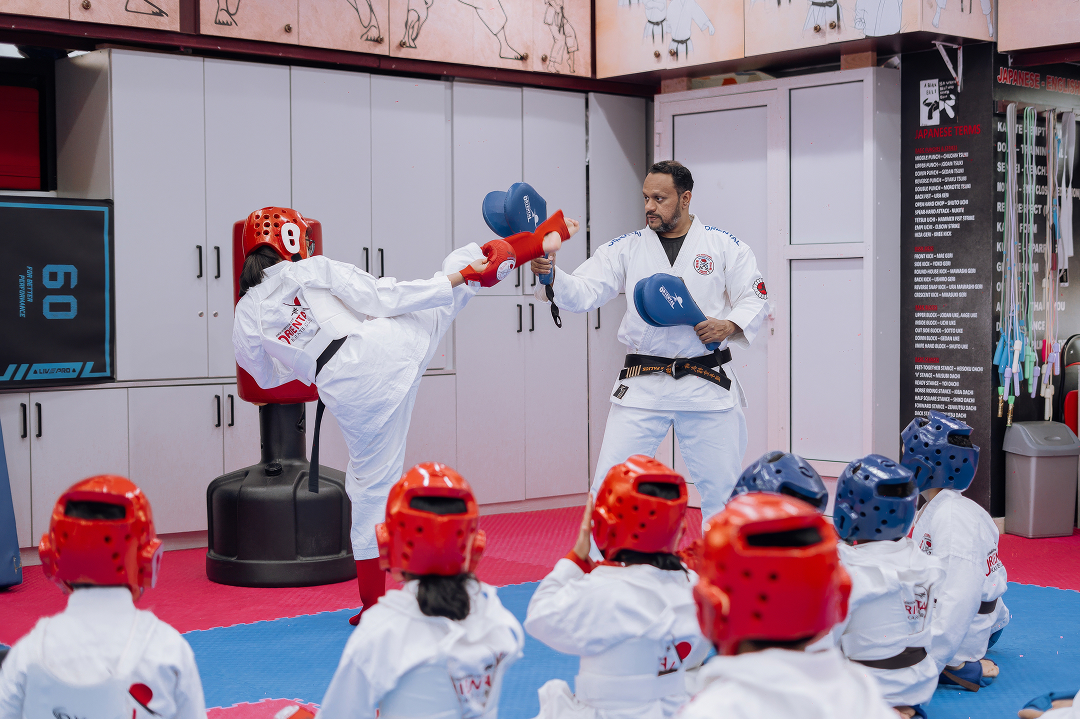
For example, we used to introduce kumite (sparring) only at higher belt levels, assuming beginners were not ready. Over time, we found the opposite. When introduced earlier—through basic, no-contact drills—children became more comfortable. There was less fear, and more willingness to try.
Even beginners began to look forward to it.
In many cases, progress does not begin with confidence.
It begins with a child hesitating slightly less than before.
Similar patterns can be observed in learning more broadly, beyond training.
— Oriental Karate Team